

BS in Biology: Pre-Veterinary Medicine Degree
- Campus
What Is Pre-Veterinary Medicine?
The Bachelor of Science in Biology with an Emphasis in Pre‑Veterinary Medicine at Grand Canyon University is designed for students planning to pursue advanced study in veterinary medicine. The program can provide a pre‑veterinary foundation in animal science, vertebrate zoology and biology, which can help you build the academic preparation needed for veterinary school.
Offered by the College of Natural Sciences, this pre‑vet emphasis includes hands‑on laboratory experiences and coursework that help to develop scientific reasoning and analytical skills applicable across STEM disciplines. The program can support students seeking to work with animals and contribute to their health and wellness through ongoing professional education and scientific study.
Projected job growth rate for veterinarians from 2024 through 2034(See disclaimer 1)
Campus: $8,250 per semester [More Info]
Up to 90 credits, only 84 can be lower division
Credits: Fill out the Lopes Eval to find out what will transfer
Admission Requirements (Bachelor's)
- 16+ years old
- High School Graduate
- 2.8+ Unweighted GPA
OR 2.5+ Unweighted GPA and
- ACT: 19
- SAT: 1000*
Admission requirements may differ based on degree level, program and modality, or transfer status. Some programs of study may require a higher GPA and/or other qualifying criteria for admission. Please review full admission and program requirements in the University Policy Handbook.
*Math and reading only on a 1600 point scale (test date after 3/1/2016). SAT score of 1380 required for 2400 point scale (test date before 3/1/2016).
Why Earn Your Biology Degree at GCU?
GCU fosters a welcoming, mission‑driven campus community where you are supported academically, spiritually and personally. As a faith‑based university, pre‑vet courses are taught through a Christian worldview that emphasizes servant leadership, ethical decision‑making and compassion for others.
What To Expect in Your Pre-Vet Courses
Engaging Pre-Veterinary Learning Environment

In pre-veterinary courses, you’ll examine the latest research in animal science and health management while enjoying intellectually stimulating conversations with your peers and knowledgeable instructors.
Outside of the classroom, you can enjoy a vibrant campus life filled with recreational activities, excellent dining and student organizations. GCU’s campus, an oasis in the heart of Phoenix, supports personal growth and academic enrichment. By participating in groups like the Pre‑Veterinary Club, community outreach initiatives and campus worship services, you can enhance your college experience.
Gain Relevant Lab Experience
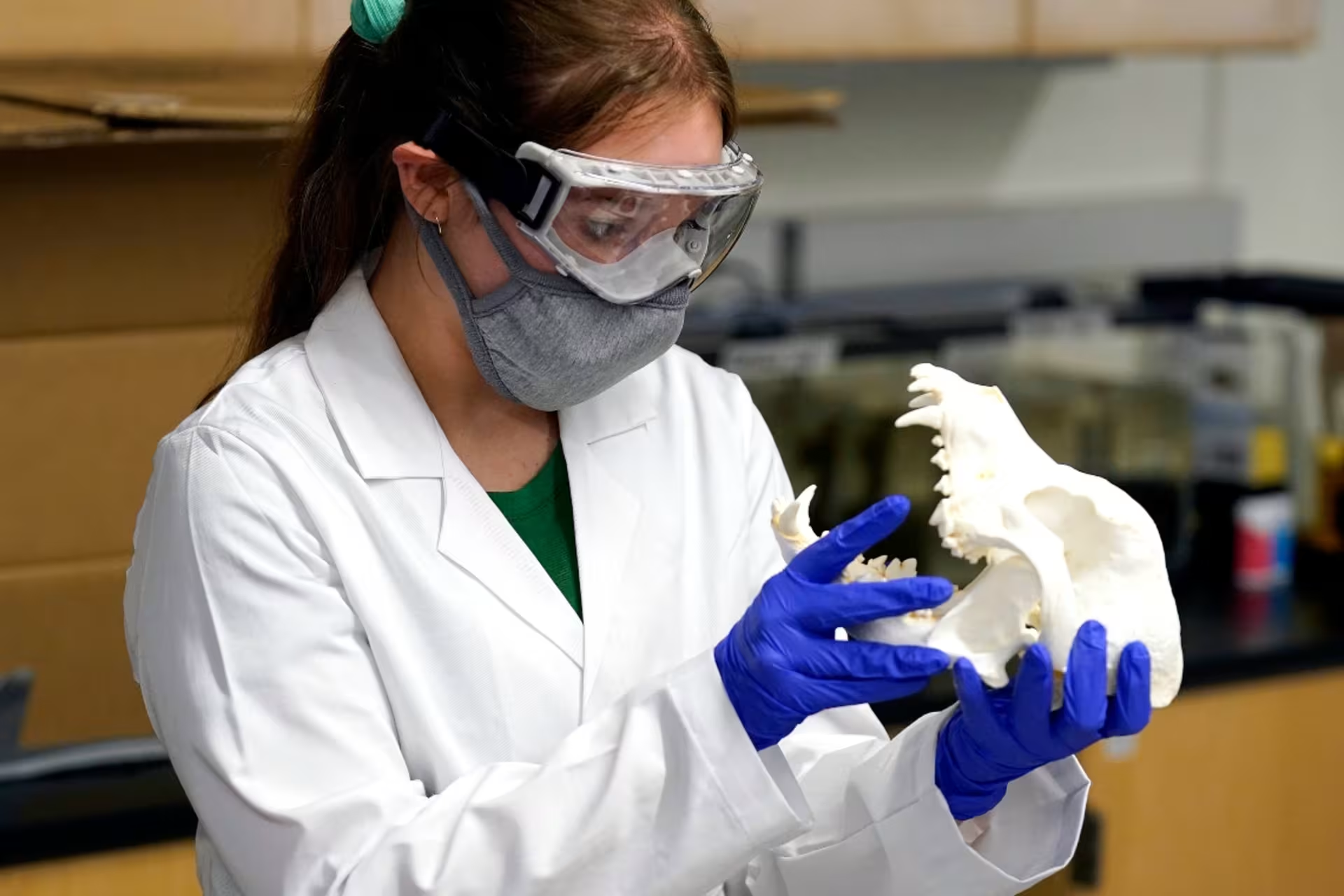
This pre-veterinary medicine emphasis program includes extensive laboratory experiences that complement the didactic coursework in biology, chemistry, physics, zoology and animal behavior. You will have the opportunity to study laboratory techniques, including microscopy methods, and conduct experiments while refining your use of common lab equipment.
College of Natural Sciences labs
Elevate Your Skills at an Accredited University
GCU has been institutionally accredited by the Higher Learning Commission since 1968. The College of Natural Sciences shares the university’s commitment to upholding the principles and standards established by our accrediting bodies.
Engage in Hands-On Biology Learning With a Pre-Veterinary Focus
This pre-vet medicine track offers numerous hands-on learning experiences in well-equipped laboratory settings. You will be led to conduct lab experiments in foundational science courses, including biology, microbiology, chemistry and biochemistry.
Additionally, the pre-vet major includes labs focused on animal health-specific subjects, such as zoology and animal behavior. You will engage with scientific methods and study design while applying evidence-based principles to design experiments.
What Courses Make Up a Pre-Veterinary Medicine Program?
GCU’s pre‑vet courses aim to address the range of prerequisites commonly required for veterinary school admission. You can build a foundation in the biological, physical and social sciences while gaining exposure to animal and human health‑related topics.
The curriculum also supports the development of interpersonal and intercultural communication skills, alongside an exploration of the psychological, spiritual and physical dimensions of health, wellness and medical intervention. Together, these components can help you prepare for advanced study in veterinary medicine and related professional pathways.
Some of the competencies and topics examined include:
Pathophysiology of animals
Explore the causes, progression and impact of diseases in domestic animals on normal biological function
Nutrition for animals
Examine the digestive anatomy and nutritional needs of domestic species to understand how proper nutrition supports health and disease prevention
Behavior of animals
Analyze animal behavior, including habits, communication and learning, to understand their interactions with environments and caregivers
Zoology of vertebrates
Study the structure, function and ecological roles of vertebrates, including reptiles, mammals and birds, through an integrated biological lens

Explore All Biology Degree Options
GCU offers multiple emphasis options for biology students. In addition to pre-vet medicine, you can choose from majors such as pre-medicine, pre-physician assistant, pre-pharmacy and more. Explore all of our biology degrees to find the right fit for you.
What Does a Veterinarian Do?
Veterinarians work in a science‑based STEM profession dedicated to protecting animal health and welfare. They diagnose and treat injuries and illnesses in a wide range of animals, including pets and livestock. Their responsibilities often include conducting physical examinations, performing surgical procedures, administering vaccinations and prescribing medications to support animal health and recovery.
They also face challenging end‑of‑life care decisions and educate pet owners about proper care, disease prevention and health management. Additionally, veterinarians are expected to uphold ethical standards and advocate for animal welfare, contributing to both animal and public health and safety.
Veterinarians can also specialize in different areas of care, including:
Forensic Veterinary Medicine
Forensic veterinarians combine animal medicine and law to identify, collect and assess evidence related to animal abuse and neglect. Using their medical expertise, they analyze evidence and present their findings in legal cases.
Clinical Veterinary Medicine
Clinical veterinarians diagnose and treat companion animals and livestock, performing wellness exams, managing injuries and illnesses and providing necessary care to ensure animal health.
Holistic Veterinary Medicine
Holistic veterinarians consider the whole animal and use a mix of conventional and complementary therapies to promote long-term health rather than just treating symptoms.
Median annual salary for veterinarians as of May 2024(See disclaimer 2)
Estimated increase of veterinary jobs in the field from 2024 through 2034(See disclaimer 1)
Tuition, Scholarships and Financial Support at GCU
As a nonprofit university, GCU is dedicated to making quality higher education accessible and affordable. To support this mission, we have extended our on‑campus tuition freeze every year since 2009, helping students plan their education with greater financial confidence. The average traditional campus student in 2025-26 could reduce their tuition by almost half, to approximately $8,900, with the help of GCU-funded scholarships.(See disclaimer 3)

GCU has not increased campus tuition rates since 2009
Ways To Save
Your education is an important financial investment, and there are several ways to help manage costs while earning your degree. GCU’s university counselors are available to help you explore available options and provide personalized guidance on your estimated cost of attendance.
Complete the Free Application for Federal Student Aid (FAFSA) annually to determine eligibility for federal grants and student loans. Since some aid is awarded on a first‑come, first‑served basis, GCU recommends submitting the FAFSA as early as possible after Oct. 1 to maximize funding opportunities.
If you’ve earned college credits from another institution, you may be able to complete your degree sooner at GCU by transferring those credits. Submit the Lopes Unofficial Credit Evaluation form, then connect with a university counselor who can provide you with personalized guidance.
You may be able to reduce your college costs by applying for GCU’s on-campus or online student scholarships. We invite you to explore available institutional scholarships and determine which opportunities you may be eligible for. GCU also encourages students to seek out third‑party scholarships and grants.
Explore Your Financial Options
Don’t wait to move forward. Speak with a GCU university counselor today to discover savings opportunities.
Pre-Veterinary Medicine FAQs
We’ve gathered answers to the most frequently asked questions about pre‑veterinary studies and careers in veterinary medicine to help guide you as you explore this pathway.
Is biology a good major for pre-vet medicine?
What skills do students develop in a pre-vet medicine program?
Who should consider studying pre-vet medicine in college?
What is the difference between animal science and veterinary medicine?
What laboratory experiences are included in pre-vet courses?
What other emphasis options are there if I want a degree in biology?
Getting Into GCU
GCU offers a streamlined admissions process designed to make applying simple and accessible. We do not require a personal statement or essay, and there is no application fee. High school students may meet admission requirements through a minimum GPA or qualifying SAT or ACT scores, depending on the program. Admission standards for biology programs can vary by degree track, as different areas of biological study may emphasize specific academic or laboratory preparation.
You can apply to a degree program at GCU in just three simple steps. Your university counselor is standing by to assist you with any questions about the application process.
It starts with selecting the program that aligns with your goals from one of GCU's 380+ academic programs — from undergraduate degrees to post-master’s certificate programs to doctoral degrees.
Pick your program
Explore our on-campus, online or evening cohort options under the Degree Programs page to find the right program for you.
Complete our online application
Your university counselor will direct you to the online application. Fill in all required information and submit the form.
Submit supporting documents
Submit your official transcripts and any relevant test scores, and confirm with your university counselor that all forms for your desired program are submitted.
Program Curriculum
General Education Requirements
Required General Education Courses
Core Courses
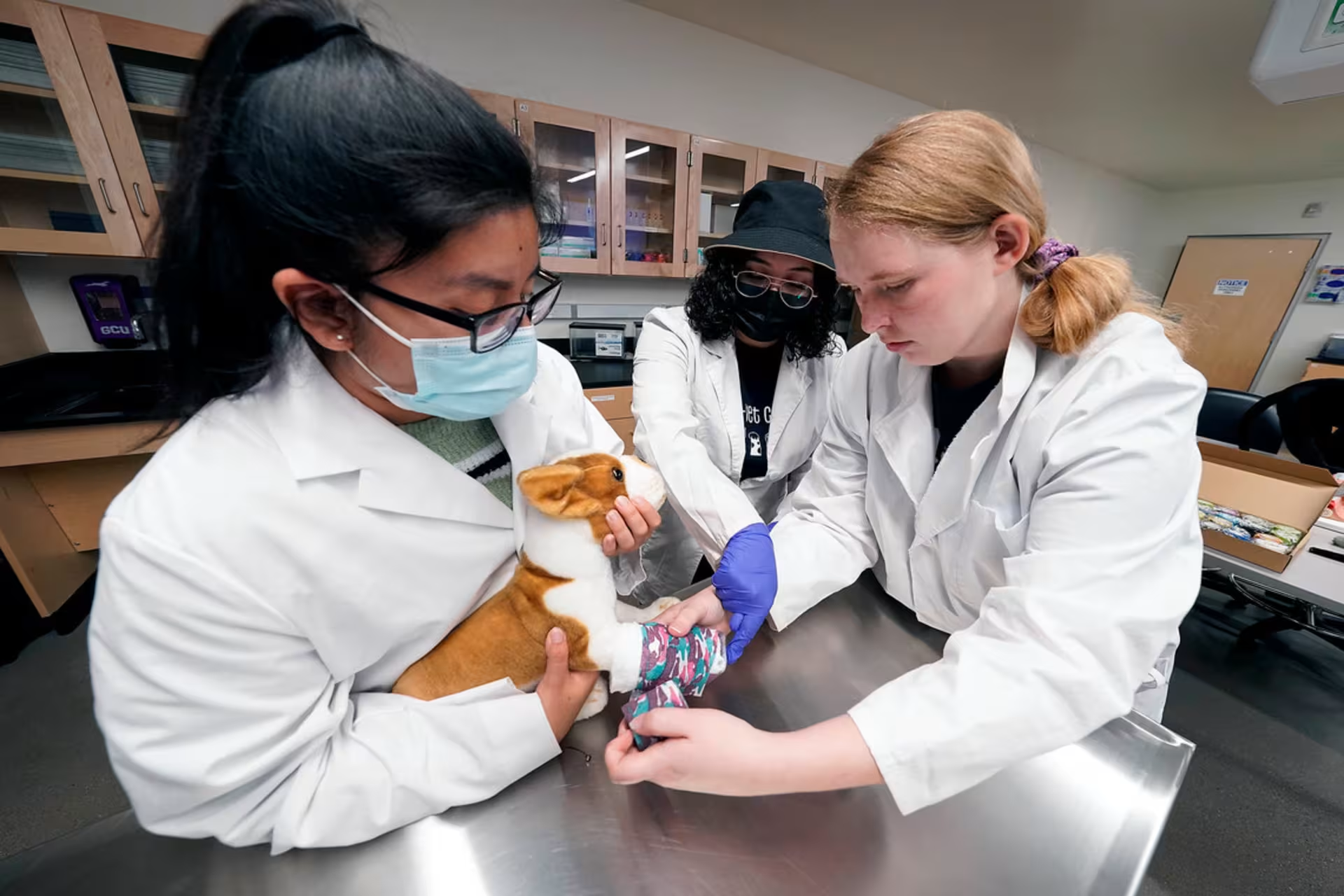

GCU’s pre-vet medicine major can help prepare to pursue admission to veterinary school.
- COVID-19 has adversely affected the global economy and data from 2020 to 2023 may be atypical compared to prior years. Accordingly, data shown is effective August 2025, which can be found here: U.S. Bureau of Labor Statistics, Occupational Outlook Handbook, Veterinarians, retrieved March 2026.
- The earnings referenced were reported by the U.S. Bureau of Labor Statistics (BLS), Veterinarians as of May 2024, retrieved March 2026. Due to COVID-19, data from 2020 to 2023 may be atypical compared to prior years. BLS calculates the median using salaries of workers nationwide with varying levels of education and experience. It does not reflect the earnings of GCU graduates as Veterinarians, nor does it reflect the earnings of workers in one city or region of the country or a typical entry-level salary. Median income is the statistical midpoint for the range of salaries in a specific occupation. It is very unlikely that a median salary will reflect an entry-level salary. It represents what you would earn if you were paid more money than half the workers in an occupation, and less than half the workers in an occupation. It may give you a basis to estimate what you might earn at some point if you enter this career. Grand Canyon University can make no guarantees on individual graduates’ salaries. Your employability will be determined by numerous factors over which GCU has no control, such as the employer the graduate chooses to apply to, the graduate’s experience level, individual characteristics, skills, etc. against a pool of candidates.
- Scholarships may be awarded based on sixth semester transcripts (high school transcripts submitted after Junior year of high school). When final official transcripts are received, GCU reserves the right to rescind or modify the scholarship if it is determined that eligibility was not achieved. GCU reserves the right to change or decline scholarship awards for any reason. If a student does not meet the minimum renewal criteria, their scholarship will be forfeited. Prices are based on the 2025-26 rate and are subject to change.
- U.S. Bureau of Labor Statistics. (2025, Aug. 28). Veterinarians: How To Become a Veterinarian. Occupational Outlook Handbook. Retrieved April 2026.
- American Association of Veterinary Medical Colleges. (2025). VMCAS 2025 Applicant Guide. Retrieved March 2026.
- American Society of Animal Science. (n.d.). What Is Animal Science? Retrieved March 2026.